



Yes. A court can remove an executor who fails to meet legal obligations. Courts usually respect the appointment of an executor named in a will, but they intervene when an executor’s actions or inaction harm the estate or the people entitled to inherit.
The court’s authority exists to protect beneficiaries and ensure proper estate administration.
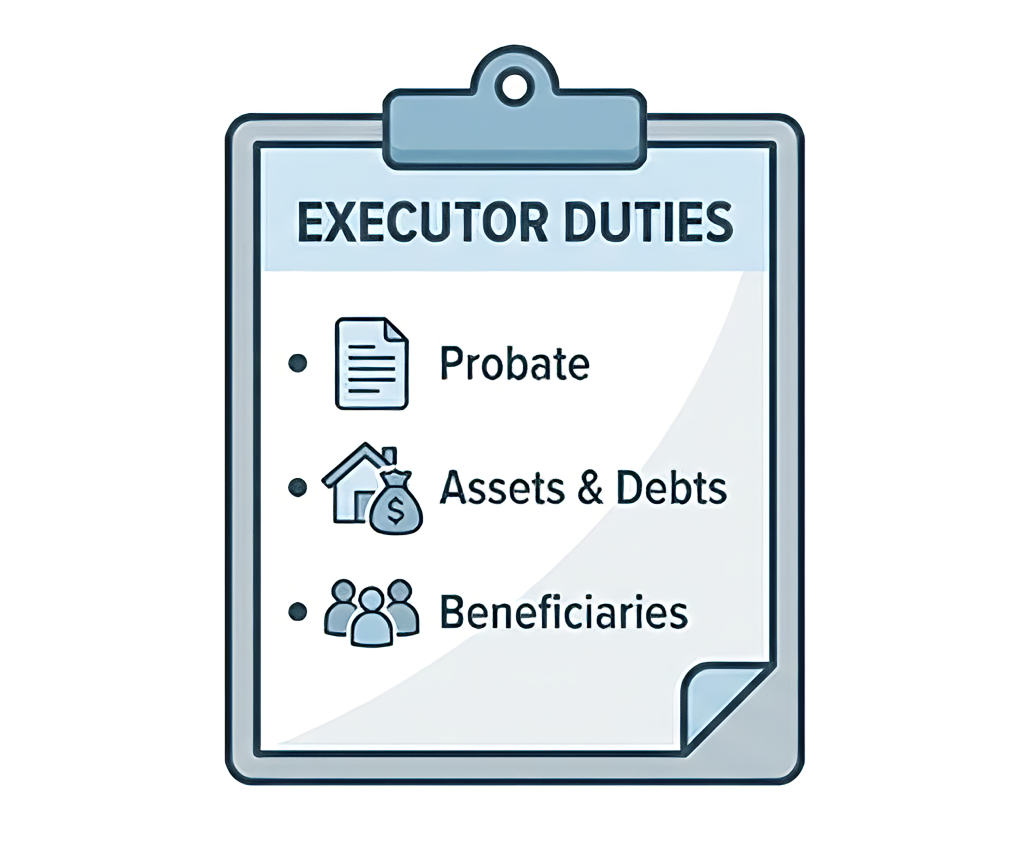
Executor Duties Explained
An executor settles a person’s estate after death. This role involves real legal responsibilities, not just a title.
In simple terms, an executor must:
- Apply for probate when required
- Gather and protect estate assets
- Pay debts and taxes
- Keep accurate financial records
- Communicate reasonably with beneficiaries
- Distribute the estate once administration is complete
The law expects executors to act with care, honesty, and common sense, similar to how a responsible person would manage someone else’s finances.
Common Executor Mistakes That Cause Problems
Problems arise when an executor fails to carry out their duties properly.
Common issues include when an executor:
- Delays estate administration without a valid reason
- Refuses to share information with beneficiaries
- Uses estate property for personal benefit
- Charges unreasonable fees or invents expenses
- Allows estate property to fall into disrepair
- Treats beneficiaries unfairly or with hostility
Courts take these issues seriously because beneficiaries rely on executors to protect their inheritance.
Executor Removal Case Example: Lawrence v. Lawrence
The Manitoba case, Lawrence v. Lawrence, shows how courts apply these principles in practice.
Two brothers, Michael and Maynard, had entitlements under their grandmother’s and mother’s estates. Michael served as executor under both wills.
More than ten years after the grandmother’s death, Michael still had not completed basic estate tasks, including:
- Filing for probate
- Providing a copy of the will
- Accounting for estate assets
The estates were relatively straightforward, yet progress remained minimal. Michael made one partial payment without explaining what happened with the remaining estate funds.
When Maynard requested information through a lawyer, Michael responded aggressively. He failed to provide meaningful answers and threatened consequences if Maynard pursued court action.
Executor Misconduct Identified by the Court
The court also found that Michael:
- Used estate property for personal benefit without compensating the estate
- Claimed management fees for properties that sat vacant for years
- Attempted to charge high hourly accounting rates despite lacking qualifications and proper records
- Allowed estate properties to deteriorate, risking loss in value
These actions showed a pattern of neglect and self-interest.
Why the Court Removed the Executor
Courts do not remove executors lightly. In this case, the judge concluded that Michael had completely failed to fulfill his responsibilities.
The court found that:
- The executor did not act in the estate’s best interests
- His conduct obstructed estate administration
- The delays lacked justification
- The beneficiaries faced a real risk of financial harm
As a result, the court removed Michael as executor, appointed Maynard to take over, and ordered Michael to provide full financial records and return all estate documents.
Read the Lawrence v. Lawrence decision here – Lawrence v. Lawrence
What This Means for Families
This case highlights an important lesson. Serving as executor is a position of trust, not control.
Executors who ignore their duties risk removal and possible financial consequences. For beneficiaries, this decision confirms that courts will step in when an executor fails to do the job properly, even when the executor is a family member chosen by the deceased.
If you have concerns about estate management or questions about executor responsibilities, early legal advice can help prevent conflict and clarify obligations.